Where orders get stuck in daily work
When lunch orders move verbally, on paper, and by calling across the room, I can lose track quickly: a change reaches the kitchen late, a side dish is missing, or two people assume they own the next step. A restaurant ordering system should therefore do more than digitize entry; it should make handoffs understandable in daily work. I first observe where information is lost and what that means for guests and staff.
I record concrete situations rather than general complaints: delay caused by a question, duplicate entry, an unreadable note, or a change that was not passed on. I include shift, station, and next step, without assigning blame too soon. Then I can decide whether clearer ownership is enough or whether a system capability would genuinely help.
I also use the timing of a problem as a clue: did it occur before entry, during handoff, or only during preparation? This prevents us from treating a kitchen delay as a cashier issue. I record the point in the route before proposing a change.
Prepare item data and options carefully
Unclear item names slow down every order. I check whether dishes, drinks, sizes, sides, and genuinely available options use consistent terms across the team. I handle allergen and special-request information under the restaurant's procedures and verify it properly; a POS does not replace accurate product information. A restaurant ordering system is only as useful as the data and wording we can maintain reliably.
I review the menu with service and kitchen. We agree what can be selected, which questions must be asked, and how sold-out items are communicated. One named person owns menu changes and a time for checking them. A short pre-shift review is enough when everyone knows where the current version lives and how to report a discrepancy promptly.
For each menu change, I check a few realistic orders with service and kitchen. We compare wording, quantity, and requested option, then agree how a mistake is reported to the right person straight away. That small review is more useful than assuming the menu remains clear after an edit.
For a seasonal menu, I schedule this review before the first service that uses the changed item. The kitchen and service then begin with the same naming and availability, rather than learning about the update through a guest's question.
Take the order in service
During ordering, I need to listen to the guest and keep the entry complete. An unclear table or seat, a missing course, or an unconfirmed request can occupy several people later. I use a short repeat-back for critical details: item, quantity, requested option, and any necessary question. A restaurant ordering system helps when it records the necessary information clearly and remains practical during a real conversation.
I test more than a quiet demonstration. Service staff try typical orders with changes, questions, multiple guests, and a busy dining room. I observe whether eye contact suffers, an order is accidentally entered twice, or a new employee understands the selection. If someone still has to keep a separate private note, the handoff has not been resolved well enough.
An order screen must not replace the guest conversation. I ask staff to check whether they can keep the sequence for a party, repeat the request accurately, and mark a question that is not yet resolved. If they need a separate note to remember a key detail, we revisit the process.
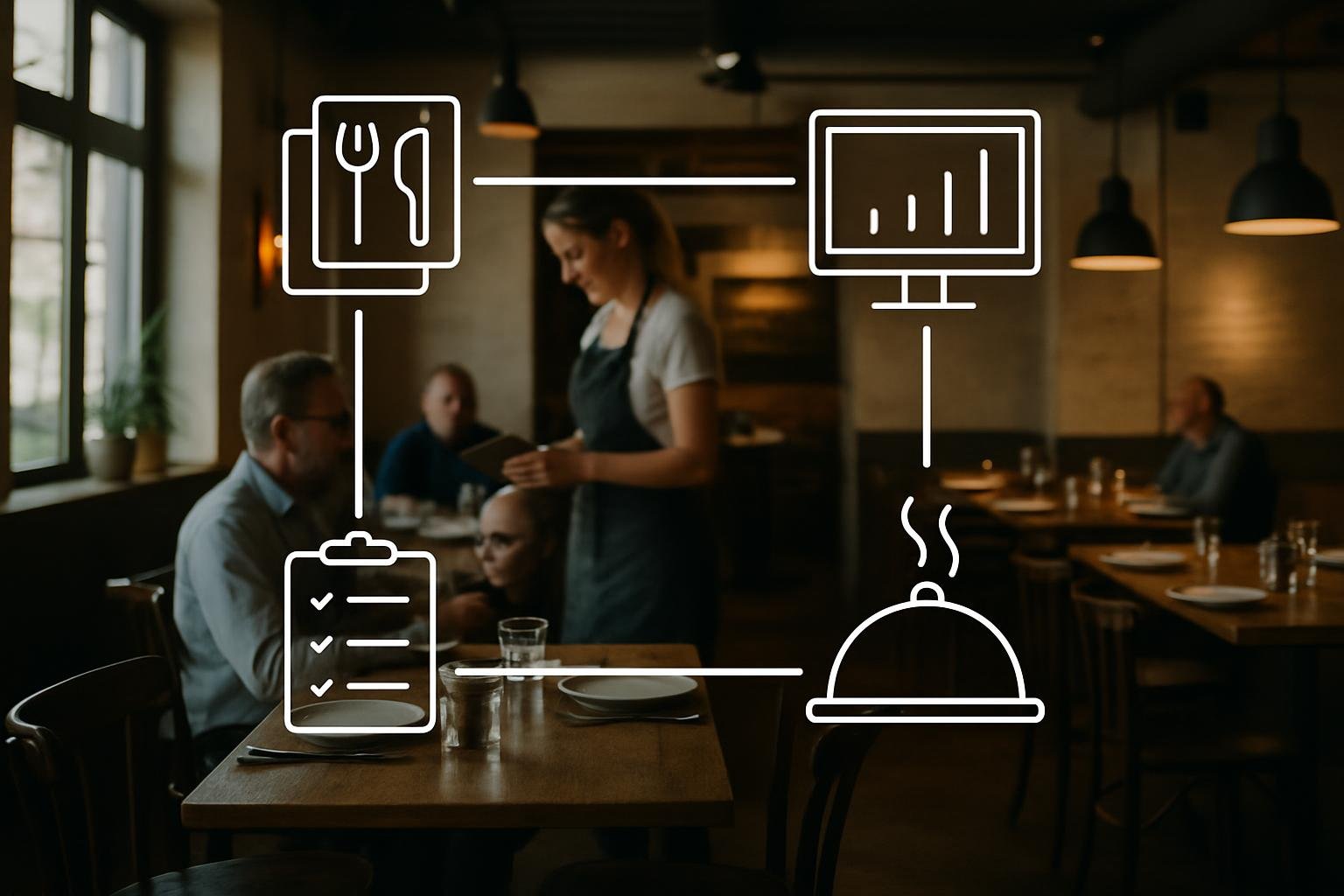
How the ideas connect
The opening sections of this article, shown together.
Where orders get stuck in daily work
When lunch orders move verbally, on paper, and by calling across the room, I can lose track quickly: a change reaches the kitchen late,…
Prepare item data and options carefully
Unclear item names slow down every order. I check whether dishes, drinks, sizes, sides, and genuinely available options use consistent…
Take the order in service
During ordering, I need to listen to the guest and keep the entry complete. An unclear table or seat, a missing course, or an…
Make the kitchen handoff traceable
Once an order is passed on, the kitchen needs information in a sequence it can work with. Questions often arise not from lack of effort but because a modifier, course, or change did not arrive clearly. I agree with kitchen staff which details matter and how service can tell that information was received. For me, a good restaurant ordering system means the responsible people see the same order instead of comparing competing versions.
In a shared test, we follow an order from first entry through preparation and then check a correction. I ask to see exactly which order details are available in the planned Bonzumo workflow and what staff still need to coordinate verbally. I assume neither automatic kitchen routing nor specific alerts. If information remains open, it gets an owner and a clear way to report back.
For the kitchen, it is not enough that an order arrives; it must be clear and timely. I ask which sequence matters during a real service and how the team can resolve an unclear detail without blame. A short agreed response is safer than several people guessing.
Handle changes, cancellations, and sold-out items
Changes are part of restaurant work: a guest adds a request, a dish sells out, or a table needs to move a course. Staff need to know what is updated, who informs kitchen and service, and how an old detail is recognized as obsolete. I make clear that a change is never silently assumed. Until affected roles know the new status, the transaction remains open in my process.
I write short, trainable paths for common exceptions: check the item, state the impact, inform the responsible station, and wait for confirmation. Interrupted entry and shift change also need a clear owner. Guests should not hear conflicting answers while the kitchen is working from another version. During the test I also check how existing data and receipts are handled when something is corrected instead of assuming a retrospective change is simple.
When an item is unavailable, service needs current information and a confident answer for the guest. I practise replacement suggestions as a conversation instead of assuming unconfirmed availability in the system. The person who changes the menu also needs to tell affected stations.
Include staff and shift handover
Management cannot introduce a system alone. Service, kitchen, and any counter staff need to understand what changes in their work and when feedback is required. I name a contact for each station and practise with realistic examples. New team members learn the complete route from order to kitchen handoff, not just individual controls. A restaurant ordering system can then support a changing roster without leaving knowledge with only one experienced person.
At shift change we explicitly review open orders, questions, and amendments. A short status says what is confirmed, what still needs checking, and who continues. I keep the internal routine short enough to use during a rush. After several shifts, I ask both stations what information is still missing and whether work simply moved from the server to the kitchen.
A colleague covering an absence must be able to take over ongoing work. We therefore agree who reviews open orders and what concise handoff is sufficient, so staff do not create parallel private lists. Responsibility stays visible even if the original server is no longer on the floor.
Read reports in their operating context
When deciding what to change after rollout, I do not rely on one number alone. Reports and daily-close information may provide an operating overview, but I interpret them alongside opening hours, menu, staffing, reservations, and unusual days. A change in orders can have several causes; by itself it proves neither smoother work nor greater satisfaction. I first frame a question that can be checked before changing a lasting rule.
For a debrief I choose a few observations: where questions arose, which details were often missing, and where the next station waited. I also ask employees who actually performed the task. If Bonzumo offers reports or daily-close information relevant to the question, I confirm their scope and meaning from current product information. I do not use unclear metrics as a performance judgment about individual staff.
I compare observations before and after the trial across similar shift types. One evening is not enough because guest volume, staffing, or an event can influence the workflow more than the new entry method. I keep the comparison practical and discuss it with both stations.
If a report cannot answer the operational question, I note the gap and return to observation instead of inventing certainty. This keeps a useful review separate from a claim the available information cannot support.
Assess Bonzumo with a real order route
I review Bonzumo using the same sequence guests and staff face each day: select an item, check details, pass the order on, handle a question, and complete the transaction through the agreed workflow. The known areas of sales and orders and kitchen are relevant discussion points; I explicitly confirm concrete screens, automation, device requirements, and connections to other systems. A suitable solution must fit my menu, staffing, and way of working, not only a demonstration.
I keep a small test record: normal case, change, exception, open product question, and team ownership. Only then do I choose a starting station and training plan. Anyone selecting a restaurant ordering system should also simulate a busy service, a question, and a staff change. This shows whether Bonzumo supports the intended process and what prerequisites must still be confirmed before wider use.
For rollout, I record which Bonzumo function I personally checked and which provider question remains open. That helps the team distinguish an intended use from confirmed product scope. I make no assumption about compatibility, automation, or integrations without direct confirmation.
Putting it into practice
Later sections put the topic in the context of day-to-day operations.
Include staff and shift handover
Management cannot introduce a system alone. Service, kitchen, and any counter staff need to understand what changes in their work and…
Read reports in their operating context
When deciding what to change after rollout, I do not rely on one number alone. Reports and daily-close information may provide an…
Assess Bonzumo with a real order route
I review Bonzumo using the same sequence guests and staff face each day: select an item, check details, pass the order on, handle a…