Yes, but only if I keep the risk deliberately small
Yes, you can open a small restaurant without much experience. I would only do it, though, if the concept is small enough that early mistakes do not overwhelm me financially or operationally right away. In my experience, people without a hospitality background rarely fail because they lack passion. They fail because they underestimate how many moving parts arrive at once: menu, purchasing, staffing, service, POS, and daily closing. A realistic beginner setup is not an 80-seat dinner operation with cocktails and late nights. It is more like a compact lunch spot with 18 to 24 seats, a short menu, and defined opening hours, where I can learn the work without moderating ten different fires every evening.
So the real question is not whether experience is absolutely required. It is whether I build a business model that a beginner can actually run. If I start with too many dishes, very long opening hours, and endless special cases, I pay for my learning through stress, spoilage, and staffing chaos. If I limit complexity, I can compensate for missing experience with preparation, reliable routines, and good people around me. Guests notice quickly whether a place is run with focus. Employees notice it even faster, especially in the first busy week. That is why I would organize a new opening so the team can work cleanly and repeatably, instead of improvising through every shift.
I cannot replace experience, but I can buy the right parts of it
Having little experience does not mean I must personally master every role. It means I need to separate very clearly between decisions I can learn myself and tasks where I need proven competence from day one. I would not try to be owner, head chef, shift lead, buyer, and numbers person at the same time. A sensible setup can look different: I lead the concept, budget frame, and guest promise, but I bring at least one person with real operational restaurant experience into the core team for kitchen or service. That is not a luxury line in the budget. It is risk control. An experienced operator often sees before opening whether the work paths, mise en place, and menu can survive a real lunch rush.
I see the same self-deceptions again and again in hypothetical founder situations. Someone cooks well at home and mistakes that for kitchen organization. Someone eats out a lot and mistakes that for understanding service. Someone builds the budget as if the room will be full from week two. As the operator, I need to take those errors seriously and turn them into hard limits. I would rather start with five strong dishes than fifteen average ones. I would rather accept fewer seats if a two-person team can actually run the shift cleanly. And before opening, I define who truly has the final say on complaints, food cost, staffing, and closing, so nobody is guessing when pressure hits.
Before I sign a lease, the concept has to survive a normal day
Before I commit to a location, I test my concept in my head not as a brand idea but as a workday. Who comes at what time, how long do they stay, what do they order, how many hand movements does each dish require, where do waiting times build up, and how much depends on weather or weekday? A small restaurant run by an inexperienced owner should choose a concept that can be explained and repeated. One workable example is three lunch mains, two fixed desserts, a compact drinks list, and a clear target group such as office workers or the neighborhood. The moment I realize the place only feels interesting if I constantly invent promotions and exceptions, that is usually a warning sign for a first opening.
I also check whether the room supports the concept or quietly sabotages it. A beautiful site does not help me if storage, dishwashing, pass, and dining room are fighting each other. Beginners especially underestimate walking distances: ten extra steps per table become brutal over one full hour. If I plan to take reservations, I also need a clear table logic, or I create tension at the door before service even starts. For that kind of decision, a structured view of tables and areas such as A well-prepared service starts with a clear table plan is useful, but the groundwork is still mine. Capacity, average stay length, and realistic pacing have to match the concept instead of wishful thinking.
How the ideas connect
The opening sections of this article, shown together.
Yes, but only if I keep the risk deliberately small
Yes, you can open a small restaurant without much experience. I would only do it, though, if the concept is small enough that early…
I cannot replace experience, but I can buy the right parts of it
Having little experience does not mean I must personally master every role. It means I need to separate very clearly between decisions…
Before I sign a lease, the concept has to survive a normal day
Before I commit to a location, I test my concept in my head not as a brand idea but as a workday. Who comes at what time, how long do…
The biggest trap is usually the wrong cost assumption
Without much experience, I am most likely to underestimate two things: how long stable sales take to build and how many small cost blocks add up each month. So I do not need a fantasy business plan. I need a sober framework with categories. That includes one-off start-up costs such as fit-out, kitchen equipment, plates and glassware, opening stock, POS setup, signage, and a launch reserve. Then there are the running costs: rent, energy, goods, wages, cleaning, packaging, maintenance, bookkeeping, and the steady stream of small replacements nobody celebrates. A hypothetical example makes this concrete: if my restaurant has monthly total costs of 24,000 euros, I cannot plan as if every open day is automatically profitable.
I work backwards from that number. If my lunch concept in this example reaches an average check of 16 euros and I open 26 selling days per month, I need roughly 58 guests per day just to cover that 24,000-euro cost base. That still does not create a comfortable buffer for profit, setbacks, or a slow start. Normally, experience protects me from this kind of wishful math, so without experience I replace instinct with calculation discipline. For the menu itself, structured recipes and costing help when available: ingredients and quantities are maintained, recipe costs become visible, and prices are not set purely by feeling. That lets me decide more consciously which dishes can carry the business and which only sound attractive on paper.
A short menu is not a compromise; it is my protection
If I open without much operating experience, a short menu is often the strongest quality lever I have. It simplifies purchasing, storage, prep, training, and service communication all at once. The goal is not boredom. The goal is repeatability. A good starter model can consist of a few main dishes that share core ingredients and follow similar preparation steps. That reduces spoilage, wrong grabs, and constant questions in service. Even more importantly, the team can explain the dishes to guests with confidence. When someone at the table sounds unsure, trust drops before the plate even arrives. A compact, thought-through selection usually feels more mature than an overloaded opening menu trying to impress everyone.
I would also build the menu so peak periods do not depend on one single bottleneck. If every second dish blocks the same pan station, oven, or plating area, I will create delays immediately even with a small room. That is where disciplined recipe maintenance helps, because I am not only evaluating flavor but production reality. In Bonzumo, articles and recipes can be structured with ingredients and quantities, so I can see recipe costs and compare them with my target food-cost level. That does not replace a skilled cook, but it does stop me from steering prices, portions, and purchasing by intuition alone. For founders without routine, that kind of sobriety is often worth more than creative overambition.
The team has to cover my gaps without living in hero mode
A small restaurant opened by someone with limited experience stands or falls with a team that has clear responsibilities. I cannot send new employees into a shift with unspoken expectations just because the operation is small. Who greets guests, who owns the pass, who checks open tables, who closes the day? If I am still learning, everyone else needs even clearer routines, not fewer. For shift organization, it helps to have one shared place for planning, time records, documents, and roles, for example Give your team a clear start to every working shift. But the real benefit only appears when I actually assign responsibilities cleanly instead of letting everything belong vaguely to everyone.
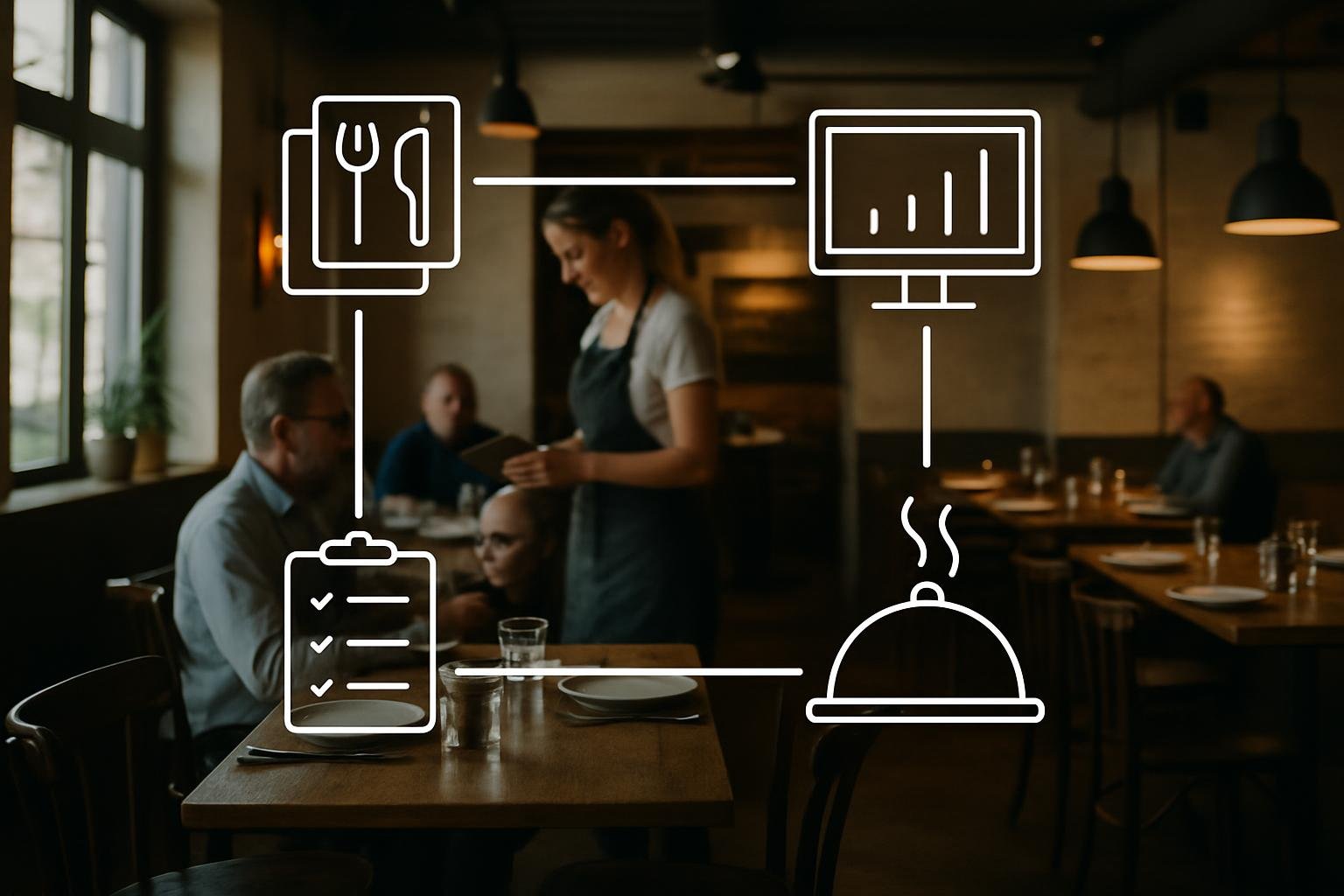
In live service, simple and traceable systems matter more than founder mythology. If I run table service and counter sales, I need the same transaction to stay intact from order to payment, so nothing disappears between shouted notes, scraps of paper, and memory. Bonzumo can help very concretely here because table, order, kitchen, payment, and closing remain connected on the same data basis. The team can see open tables, enter orders in the right table context, split payments in a traceable way, and later find individual transactions again during closing. For me as an owner with little experience, that matters because operational questions get clarified where they arose, not reconstructed late at night from loose notes.
Opening does not mean being finished on day one
I would never open as if everything had to be final from the first evening onward. A better approach is a deliberately limited start: fewer opening days, measurable occupancy, a narrow menu, fixed roles, and one weekly review. Then I can observe which dishes stall, when the team starts slipping, which guests actually come, and what the real reservation or walk-in pattern looks like. In the first weeks, I should not change everything at once. I might adjust opening hours first and the menu later, or staffing first and seat count later. Inexperienced founders often make themselves blind by applying five corrections at the same time and then no longer knowing what actually improved the business.
Whether I should keep pushing, slow down, or sharpen the concept depends on a few hard questions. After the real costs are deducted, is there a contribution margin that can support the business? Can the team handle a full shift without constant firefighting? Are guests being served reliably, warmly, and on time? And can I understand the daily closing instead of relying on a vague feeling that the day probably worked? If I can answer those honestly with yes, a restaurant started without deep experience can become a solid operation. If not, the right answer is usually not more courage. It is less complexity. That is the best chance I know to open successfully without a long hospitality track record.
Putting it into practice
Later sections put the topic in the context of day-to-day operations.
A short menu is not a compromise; it is my protection
If I open without much operating experience, a short menu is often the strongest quality lever I have. It simplifies…
The team has to cover my gaps without living in hero mode
A small restaurant opened by someone with limited experience stands or falls with a team that has clear responsibilities. I cannot send…
Opening does not mean being finished on day one
I would never open as if everything had to be final from the first evening onward. A better approach is a deliberately limited start:…